Wednesday, December 14, 2011

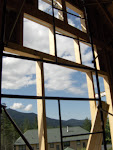
Another Energy Star Completed Home

Wanting to celebrate Christmas at their home in N.H. was the deadline for our recent clients. Abode began this Energy Star Version 2.5 home in July and by November gave these excited homeowners the guarantee they'd be hosting that first Christmas in N.H. with their children, grandchildren and canine companions.

Building many years ago and knowing building standards and choices have changed greatly, our clients took a year and a half to research home builders that offered the energy efficiencies, quality, turnkey timeline and the critical budget for the house they hand in mind to build.

Informal meetings ensued with our project manager Gerald Fransen and Principal Bob Wildes to hone the goals and wish list items they wanted in this 2 floor, full basement home. References of recent clients allowed them to ask impartial questions to those experiences of building an Abode home from inception to completion.
Once built, a comprehensive energy performance review was done by Horizon Residential Energy Services. By comparing this house to a computer model of the exact same house if it were built to current NEC (national energy code) standards gives a HERS (home energy rating systems) score. On a scale of 0-100, zero being a highly efficient home and 100 being built to the energy code minimum an index score of 80 or less is necessary to achieve the Energy Star label.
This home scored a HERS index of 56 making this home 44% more efficient than a standard code built home!
From the ICF basement where the "Man Cave" is bright, dry and comfortably housed to the 2nd floor sewing room/office, each area will enjoy similar interior comfort due to the combination of products used.
Panelized construction, Pella Energy star windows and doors, spray foam and fiberglass insulation, coupled with Energy Star lighting and appliances and high efficiency boiler all add up to lower fuel and utility costs. Combined with the value engineering Abode incorporates into any project, gives peace of mind and the confidence that good decision making prior to construction and ongoing suggestions/support benefit the client and their home for many years to come.

Wednesday, October 5, 2011

Water, water everywhere-Managing excess on your property

Corralling snow melt or the abundance of rain, before hitting the busy roadway led to the creation of a bio retention swale here at Abode. The objective is to funnel storm water runoff from our paved parking area where there is no curb into a depression or “swale” rather than running directly into the drainage system beside Tenney Mtn. Hwy.

To encourage infiltration onsite, a calculation was done by a civil engineer to account for the number of square feet of impervious area (ie: paved parking area, amount of roofing, sidewalks etc.) to determine the amount of pervious surface needed to offset this in the form of a storage system.

Bio-retention systems are shallow depressions made with a layer of sand beneath topsoil to hold captured water and slowly release the excess. This prevents more water from entering the Baker River unfettered, and puts less stress on the drainage ditch.

A “weir” made of stone rip rap acts as an escape valve for overflow when the swale completely fills, spilling over into the wetland vegetation below. Planted with grasses and other native species that don’t mind being water logged for short periods of time and enjoy longer dry spells reduces erosion, supports a habitat and food source for insects, birds and other wildlife.


A similar type of depression known as a rain garden is a means to carry, as well as treat storm water. Excess water is diverted by the small dry river bed made of small rocks around the house into the rain garden. Plants with deep fibrous roots like this Tamarind tree and wild grasses thrive and provide cleaning and filtration benefits. This hydrated collection area is an attractive area for plants and animals, and keeps water on our property allowing it to slowly seep back down into the aquifer.

An aquifer is essentially an underground body of water that lies well below the surface permeated in porous rock, much like a beach. When you dig a hole in the sand, the wet sand at the bottom of this shallow hole or “well” represents an aquifer. The level the water rises to in the hole would be your water table.

Planning and creating a system to manage excess water runoff gives a twofold benefit. By minimizing destructive erosion to your property and limiting the spillover effect to surrounding land it places less burden on the public drainage system. Slowing down excess reduces the barrage introduced to the nearby river and allows us to contain as much water as possible to our property and ultimately filtered back into the aquifir. Paired with beautiful plantings your quality of life gets a boost along with your property values.


Thursday, September 22, 2011

PSU intern C. Cook & Project Mgr. G. Fransen honored


A recent PSU Environmental Planning intern, Chris Cook and ABODE's Project Manager Gerald Fransen were recently honored in the University's "Simply Amazing" viewbook, which is used to promote Plymouth State University in the United States as well as abroad.


Working with Gerald, Chris was able to correlate office work involved on projects with field experience during the course of building Abode was doing at multiple locations. Witnessing many phases of construction from preplanning to handing the keys over to the owner gave him real world experience for the energy efficient green building we are known for.

During those winter months as they carpooled to jobsites, valuable one on one time was available to discuss different aspects of these homes and the systems that would be going into them. A trouper, Chris was prepared to do everything from sweeping up at a jobsite to doing estimating and takeoffs and with good humor. Interacting with subcontractors and having opportunities to problem solve were an invaluable source of experience for him and a welcome chance for Abode to mentor a budding professional.

John McKeith Photography courtesy of Plymouth State University

Thursday, August 4, 2011

Abode rainbows


Great rainbows from one of our multiple recent storms.
Between 2008 and 2010, twenty seven states passed legislation enabling Property Assessed Clean Energy (PACE) programs. Local governments were then allowed to raise funds for homeowners and businesses to use for renewable or energy efficient systems. The owner would then repay the lending agency eventually through property tax. Shortly after being set up it was put on hold by the Federal Housing Finance Authority (FHFA) which considered PACE programs loans instead of tax assessments and would not support mortgages for these properties. Recently, the PACE Protection Act of 2011, has been introduced, and has been quickly gathering bipartisan support. Its main goal will be to get PACE programs back up and running and more homeowners and businesses using alternative energy sources.
PACE has great potential here in Plymouth, which has been part of the Beacon Communities program. Last year Plymouth as well as Nashua and Berlin, started a combined effort to reduce energy usage by modifying buildings to be more energy efficient.

Check out http://www.betterbuildingsnh.com/ and http://pacenow.org/blog/wp-content/uploads/HR-2599-PACE-Protection-Act-of-2011.pdf

Thursday, July 7, 2011

Indoor Air Quality

There have been a number of visitors to Abode recently who have been concerned with indoor air quality. Anyone who struggles with allergies knows that clean air can be hard to find, especially this past spring. Indoor air pollution is composed of particulate matter, for example, dust, pollen, molds, and bacteria, as well as gaseous pollutants, which are given off, among others, by stoves, paints, varnishes, and cleaning products. According to the EPA, poor indoor air quality is among the top five environmental health risks. But take a deep breath, there are many methods to get cleaner air.
As we learn more about indoor air quality’s contribution to health problems, using low volatile organic compound (VOC) paints and carpeting, as well as having an air filtration system in our homes becomes an evident necessity. Efficiency of removing particles from the air is measured by the minimum efficiency reporting value (MERV), with a scale from 1 to 20. Medium efficiency filters from MERV 5-13 are reasonably efficient at removing a range of airborne particles. Heat Recovery Ventilation (HRV) is also beneficial up north here, where like it or not, it is cold at least 8 months out of the year. HRV systems allow the heat from the exiting air to transfer to the incoming air, increasing your home’s heating/cooling efficiency. For more information about indoor air quality check out http://www.epa.gov/iaq/ia-intro.html.

Friday, May 13, 2011

Abode's Current Energy Star report


Check out this exciting news:


ABODE Builders of New England,
Thank you for your continued partnership with ENERGY STAR. By building ENERGY STAR qualified homes, your company is doing its part to help protect the environment while offering consumers new homes that are more comfortable and save money on utility bills.
Our records indicate that your company built a total of:
4 ENERGY STAR Qualified Homes in 2010*


  • This is equivalent to:
    Eliminating the emissions from 1.96 vehicles
    Saving 11,856 lbs of coal
    Planting 3.24 acres of trees
    Saving homeowners $1,788 on their utility bills
    We thank you for the important contribution that your organization has made to energy-efficient construction and environmental protection.* Your ENERGY STAR Qualified Homes are reported quarterly to EPA by your Home Energy Rating Provider.